


We are happy to announce the latest release of Glossary for Confluence cloud. This new version comes with a host of exciting new features and performance enhancements.
For the last couple of months, our product team focused on end-user feedback in an attempt to enhance the overall user experience and bring much needed improvements to Glossary for Confluence.
Now without further ado, let’s explore the changes.
A Unified Glossary view
Throughout our previous releases, we primarily focused on the notion of creating and viewing glossaries within a specific space. And the reasoning behind the decision was pretty much straightforward. Glossaries by design are tied to specific spaces, thus the heavy focus on the space experience.
However, what we realized through feedback is that users, especially platform admins, prefer having a broader dashboard in addition to the available space views.
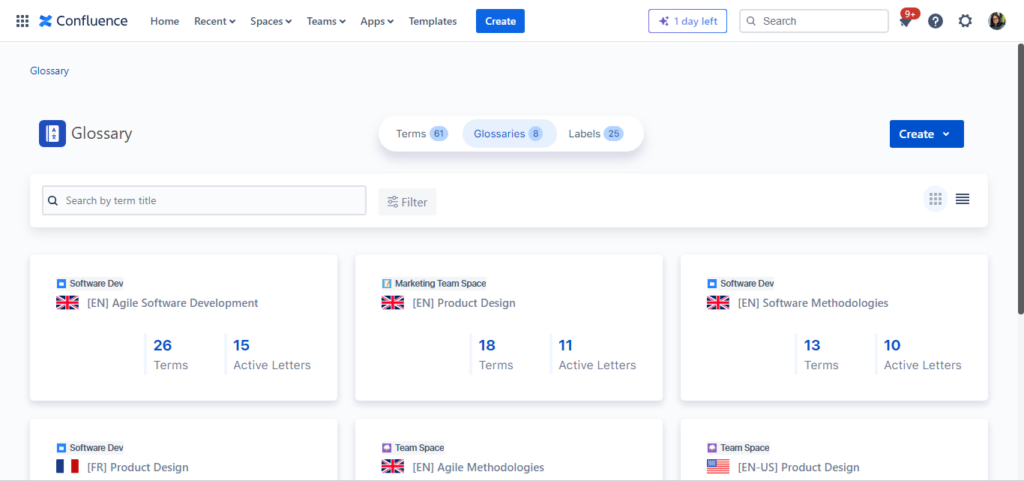
The brand new glossary dashboard is accessible from the top navigation menu. It consists of all the glossaries, terms and labels created within your Confluence site. In addition, users can directly create terms and glossaries and associate them with specific spaces.
Import glossaries in JSON file format
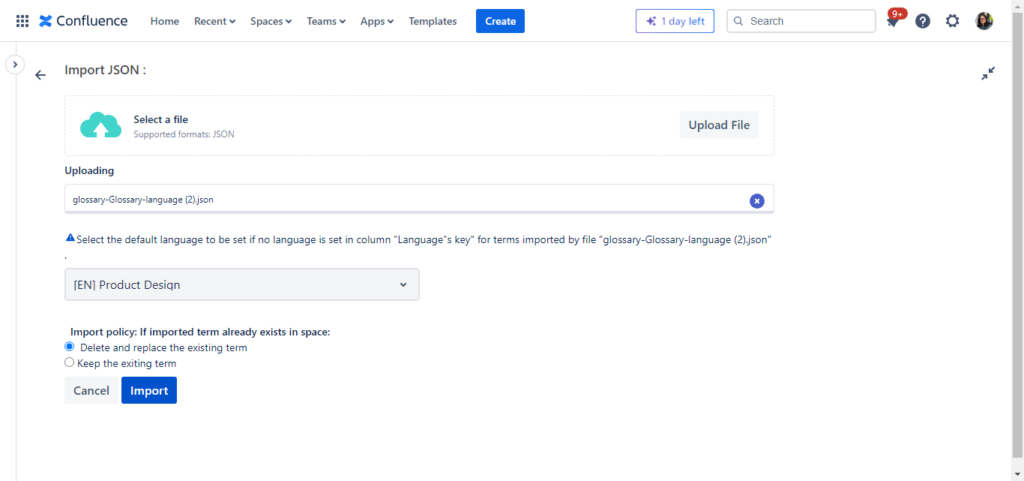
Building upon the latest release, we’re excited to introduce the ability to import glossaries in JSON file format. This new feature stands alongside our existing capability to import CSV files, significantly broadening the range of files compatible with your glossaries.
JSON, known for its flexibility and structured data representation, adds a new layer of versatility to how you organize and present glossary information within Confluence.
Allow anonymous access to your Confluence glossary
With this new release, you can access glossaries in anonymous mode. This is particularly useful when you like to share your glossaries with a wider audience, for example, clients, partners, and external stakeholders.
This enables your glossaries to be integrated within any public sites you might have such as product documentation, partner portals, Learning hubs , and more. This not only simplifies access to information but also facilitates a more inclusive and efficient exchange of knowledge.
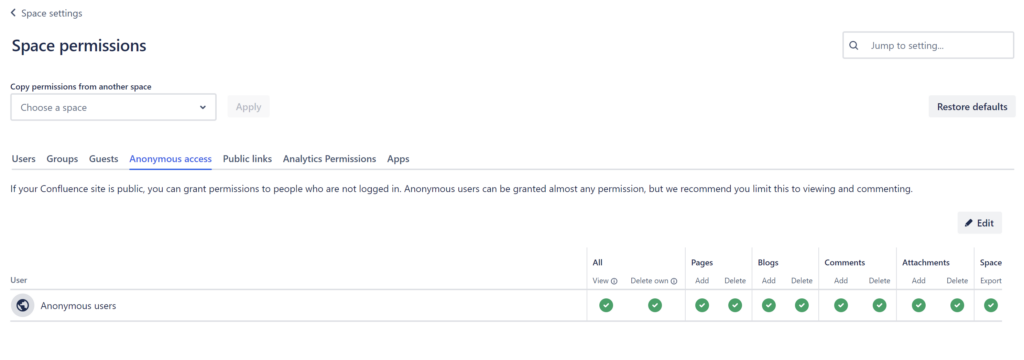
> Check out the documentation for more details on how to activate anonymous mode for Glossary.
The latest release of Glossary for Confluence Cloud is now available on Atlassian Marketplace. To learn more, please make sure to check out our dedicated YouTube playlist and give Glossary a try.
